Class
Family
Genus



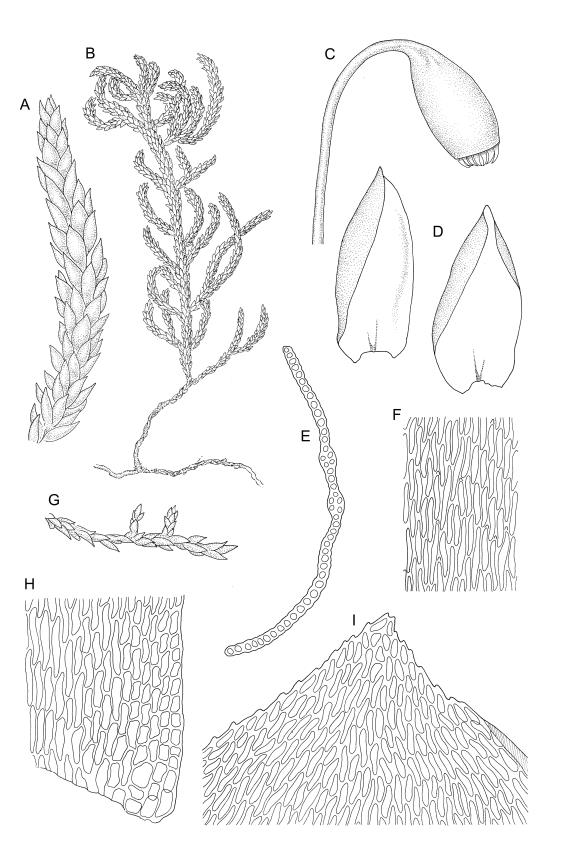
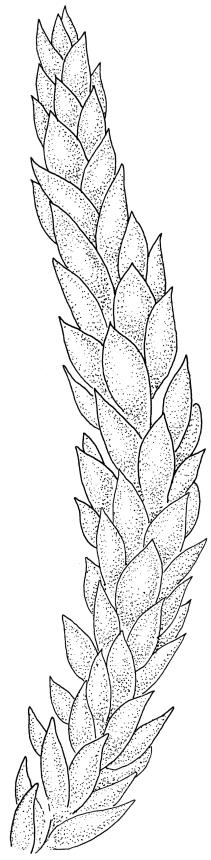
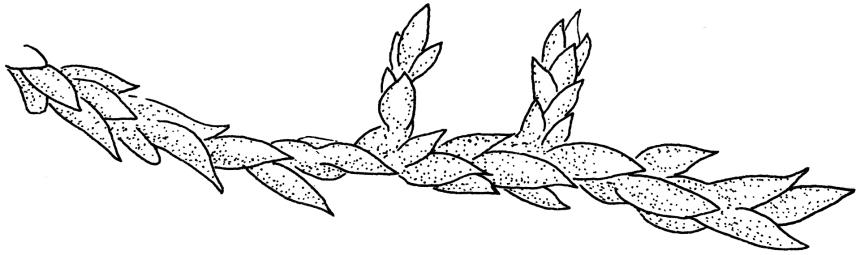
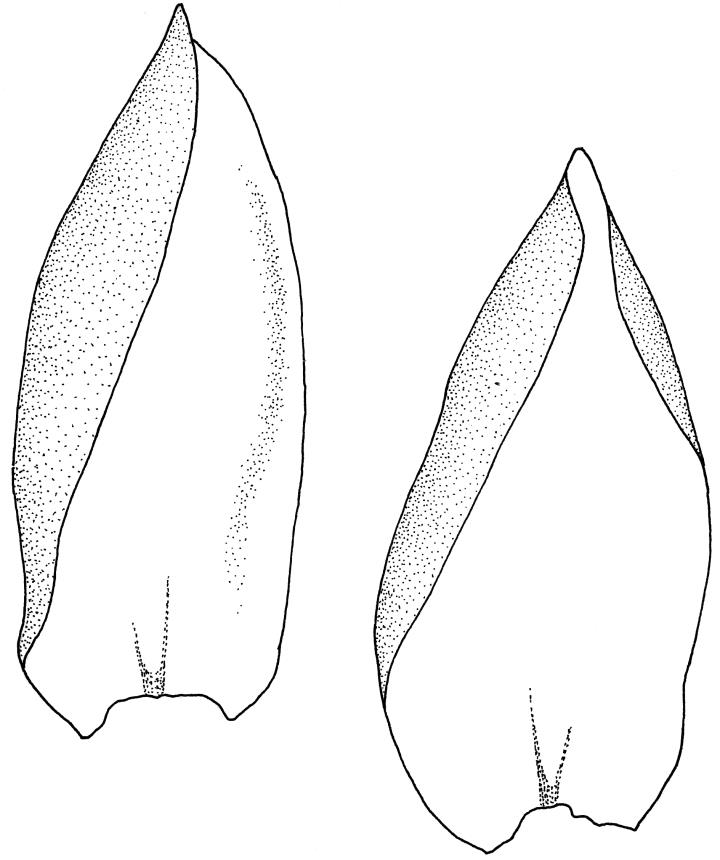
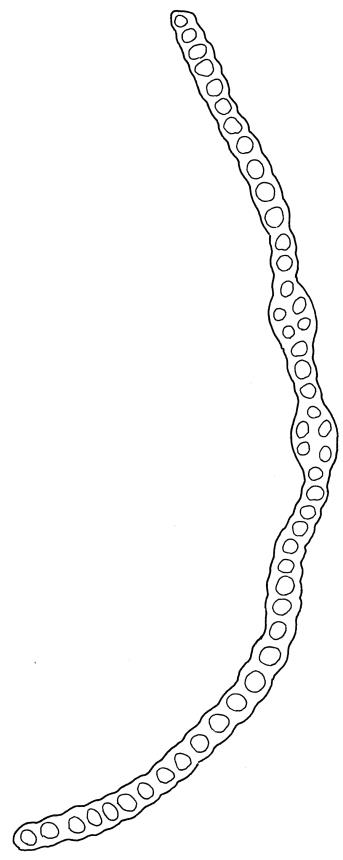
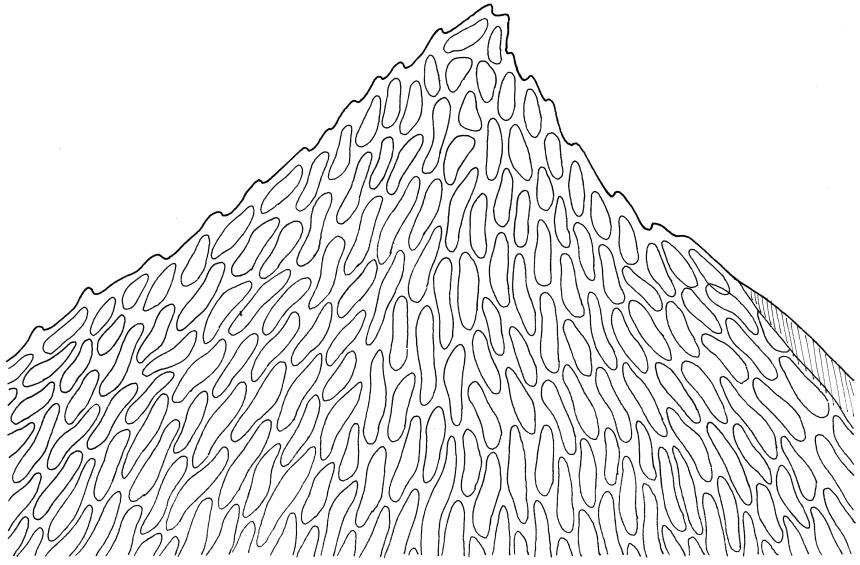
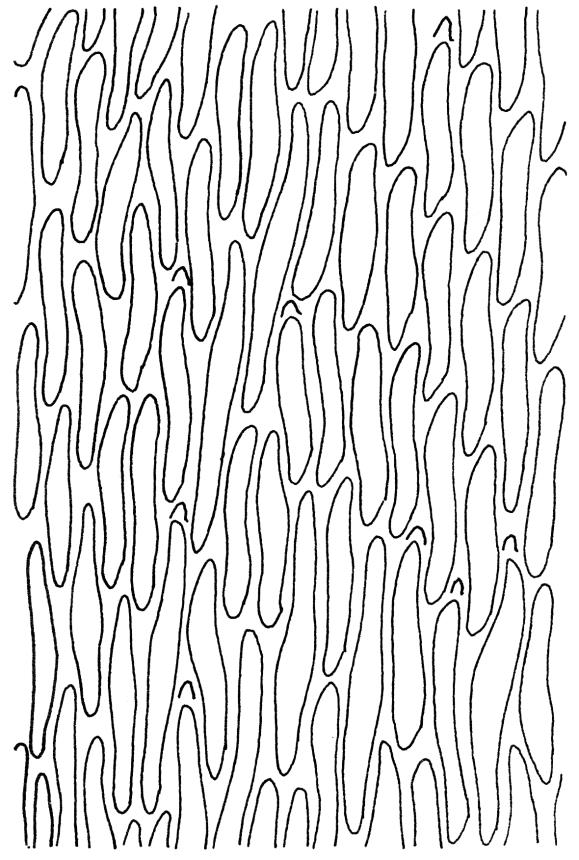
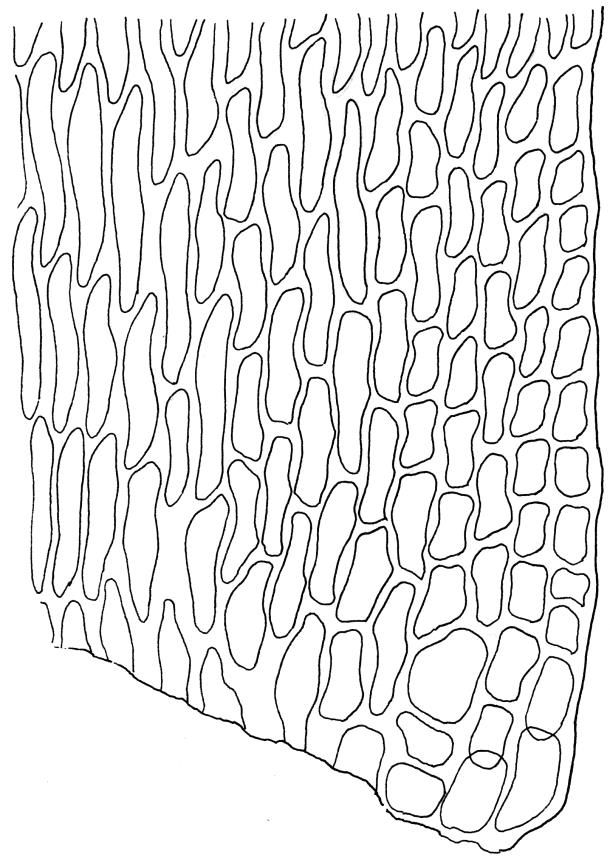
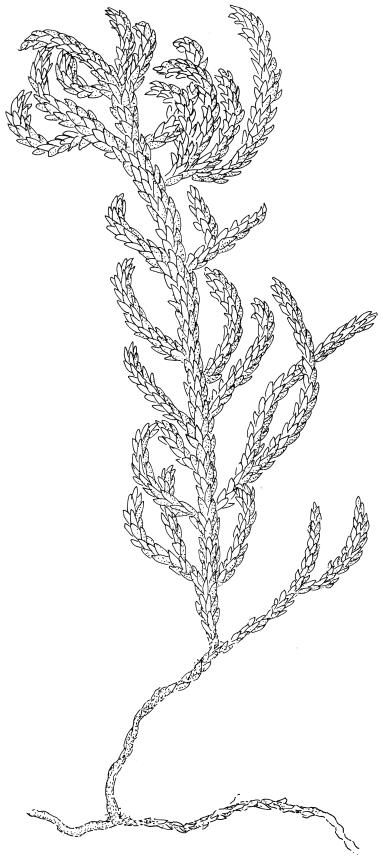
Plants moderately robust, occasionally slender, green, yellow-green to brown, mostly glossy, forming compact wefts or mats, mostly on rock. Stems creeping to erect-ascending, forming ± regularly 1(–2)-pinnate weakly stipitate fronds, in cross-section c. 250 × 360 µm, with an outer layer of 5–6 cells surrounding an inner core of parenchyma and an indistinct central strand. Branches 0.7–1.0 mm wide. Pseudoparaphyllia c. 120 µm long. Stem leaves inflated-smooth and strongly concave when moist, mostly collapsed-wrinkled when dry, broadly ovate to oblong, acute to widely acute, sometimes weakly auriculate at base, 1.5–1.55 × 0.9–1.2 mm, at margins mostly incurved and bluntly serrulate above, with alar cells ± quadrate, pigmented and forming a group c. 8 cells wide and extending c. 10 cells from the leaf base. Branch leaves smaller than stem leaves, usually homomallous, with a short apiculus that is often ± recurved, 0.8–0.9 mm, with a smaller alar group. Mid laminal cells prorate, lacking papillae, (24–) 27–34 × 5–7 µm; those at the apex rhombic, 12–20 µm long.
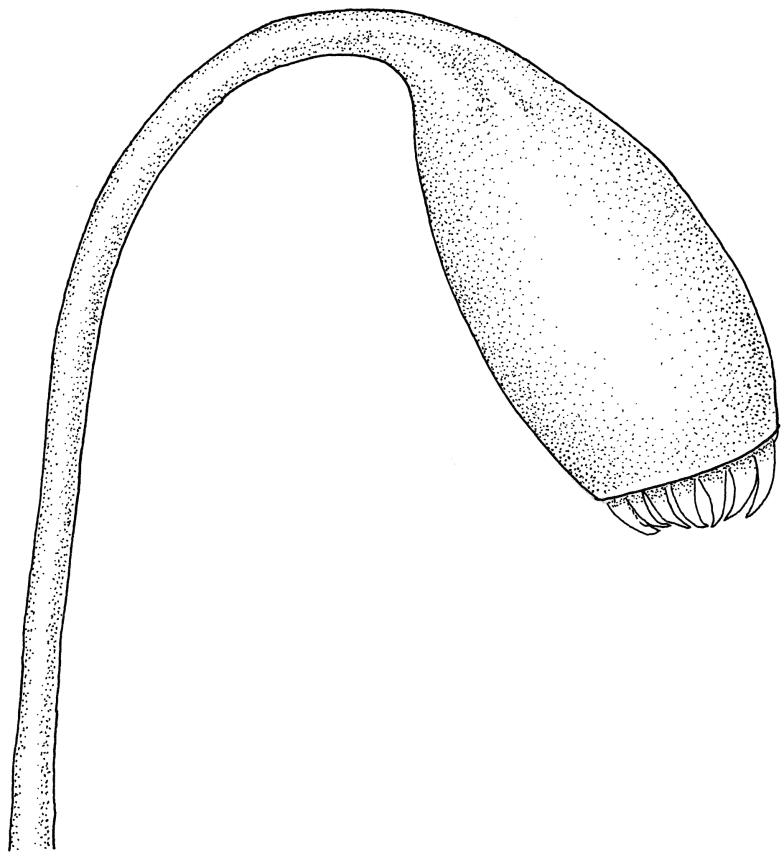
Dioicous. Setae c. 15 mm, not or weakly twisted to the left. Capsules c. 1.6 mm long; exothecial cells 38–55 × 18–30 µm. Operculum and calyptra not seen. Spores 12–15 µm.
Tangney & Fife 2003, fig. 2.
Fallaciella robusta is larger than F. gracilis, forming taller and looser mats, and it has a more pronounced stipe. It is glossier with wider stems and branches and its leaves are collapsed-wrinkled when dry, ovate-oblong, rather than ovate, and more concave, with a sharp, slightly recurved, apiculus. It lacks the papillae commonly produced by distal cell prorae in F. gracilis.
This suite of characters is suggestive of Camptochaete spp., but it lacks the tufted dendroid growth of the latter and produces mostly soft procumbent stems. Some monopodial forms of F. robusta are similar to such forms in the genus Lembophyllum but these differ in being mostly larger plants with leaves more widely concave, lacking an apiculus, and in having areolation that is more rhombic to isodiametric.
NI: Wellington; SI: Nelson (Flora Saddle, Cobb Valley, Lake Peel, Mt Mytton), Marlborough (Mt Stokes), Westland (Jacobs River), Otago (Routeburn, Caples), Southland (Milford Sound, Stuart Range, Deep Cove, and Edwardson Sound).
Endemic.
Mostly on rock. Occurs in a range of vegetation types. In Nelson these include montane southern beech forest, subalpine grassland dominated by snow tussock Chionochloa, Dracophyllum-dominated subalpine shrubland, and alpine cirque bluffs. In Southland its known habitats include lowland seral forest dominated by Metrosideros umbellata and Pterophylla racemosa, lowland southern beech forest, and upper elevation boulderfield scrub. The collection from Mt Stokes comes from Lophozonia (Nothofagus) menziesii-dominated forest, and that from Jacobs River from subalpine short grassland on a steep slope. Ranging from sea level (Doubtful Sound, Milford Sound) to 900 m (Edwardson Sound) in Southland, 930 m in Otago (Caples), 1400 m in Westland (Jacobs River), 1320 m in Nelson L.D., and 1000 m in Marlborough L.D. (Mt Stokes). The North I. locality is at 380 m.
A collection from North I. in CHR (Wellington L.D., E Wairarapa, Ruakokoputuna, Hurangi Rd, P. Beveridge, 10.12.2001, CHR 564888) is probably this species. It differs from the typical form in having a coarser, more compact and denser form, and, occasionally, longer, markedly pointed leaf apices.